


Almost-Art
Almost-art is not art, and neither is it non-art. Almost-art is that which is not quite either but in between the two, for one of several reasons. Examples of almost-art include a chair, a fishing pier, an infant's crayon drawing, or just a few brushstrokes or paint molecules in the Mona Lisa. To define almost-art is to define the "gray areas" around and in art.
Types/Categories:
1. subpart: The object being considered is only part of an art-object, and not enough to be considered art by itself. (A few paint molecules in the nose of the Mona Lisa.)
2. unfinished: The object being considered as an art-object is unfinished (or perhaps, partially destroyed). (The Mona Lisa after Leonardo just started to paint it; the Burj Al Arab hotel when it was less than half built.)
3. primitive: The object being considered is too juvenile/primitive/crude, even though there was obviously some attempt at symbolism, estheticism, symmetry, proportion, composition, harmony, etc. (Some cave paintings; most paintings by toddlers; all of Henry Moore's work.)
4. natural: The object being considered is more a phenomenon of Nature than an artifice of man. (Our world; a sunset; a fruit tree with the sun shining though it just so after a rain; a mountain area lake in situ.)
5. perspective: The zeitgeist (or an ideology, or a society) considers the object to be almost-art rather than art or non-art (even though earlier the object may have been considered art or non-art). (The crazy-straw; digital watches; a lunch box with a picture of John Wayne or Darth Vader on the side.)
6. functional: The functional or useful aspects of the object so overwhelm the perception and consideration of the object as an art-object that it is not commonly deemed to be at the level of art. (A two-year-old washing machine or microwave oven; a hackneyed or How To lecture; a porn film; a downhill slalom ski run; a coin in circulation.)
7. attempt: There was no attempt on the part of the artificer to make the object something to be admired as art, and it shows; but still the observer might admire some aspect of what he sees (maybe even inadvertently, temporarily, or unwittingly). (A crutch; a water well; a hiking path; a sentence in everyday conversation.)
8. significance: The import/significance of the art-object as an art-object is negligible. The art-object is low in artistic value (simple, or with little formal value). (Tinsel on a Christmas tree, or other decoration without pretense to art; a well made martini; a wedding cake.)
(These categories are excerpted from: www.Almost-Art.org, the Reasons page.)
Links:
For many examples of almost-art see this site.
| Almost-Art | Comment |
| www.almost-art.org | The Almost-Art site |
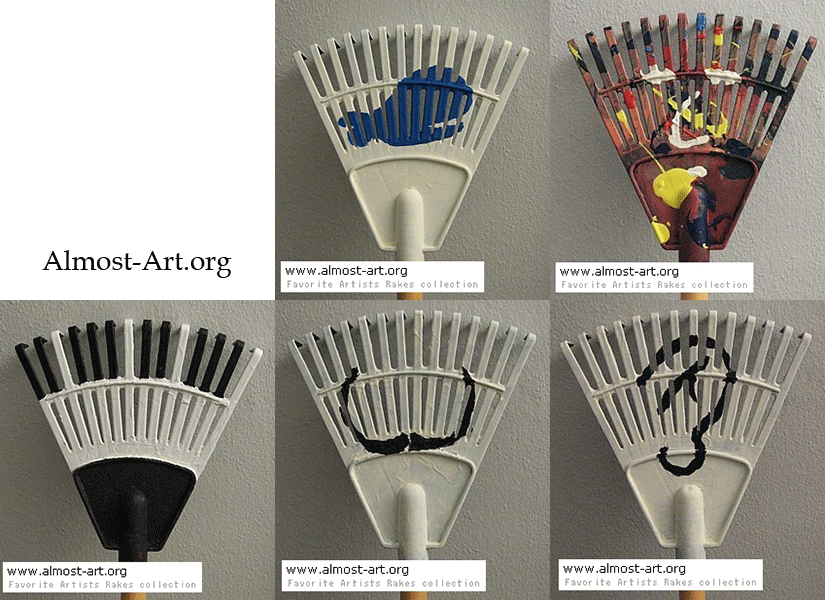
Here is an Exhibit from that site showing the Favorite Artists Rakes collection: an almost-art depiction representing in turn: H. Melville, J. Pollack, D. Beatles, L. V. Beethoven, S. Dali, and V. V. Gogh:
More:
Almost everyone has created almost-art at some time in their lives. Also, if you are like most people, you create almost-art for a living (as part of your job).
If it is "good enough for government work" (just needs to meet present needs), then it is probably not for exhibit (gallery art). If a product is for sale commercially, then it's functional requirements have probably precluded its design from being too artistic.
If you are not proud of it, then it is probably not art; but if you put a lot of work into it then you would probably consider it to be more "artful" than just non-art.
For more, see the site mentioned above.